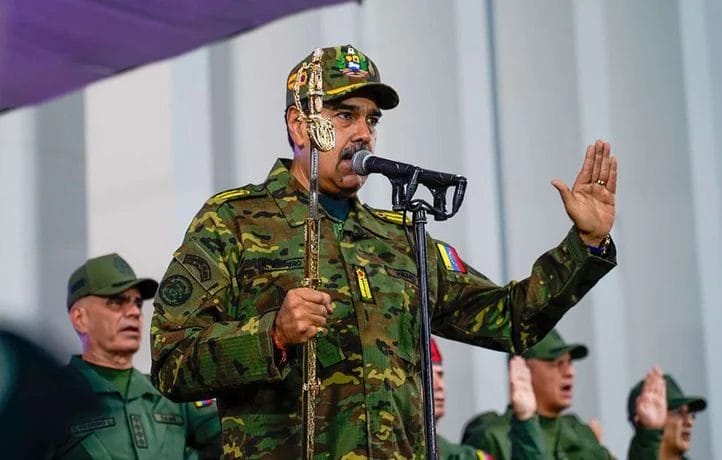
Strategic Flashpoint: Is Venezuela the Next Geopolitical Bargaining Chip?
By Clairmont Advisory | Geopolitics & Energy Series
Introduction
As the global chessboard realigns, the United States finds itself in a precarious dance between deterring rivals and preserving influence. In this unfolding narrative, Venezuela, Taiwan, and Ukraine appear less like isolated hotspots — and more like interlinked bargaining chips in a silent but seismic game between the world’s great powers.
This piece explores the possibility of U.S. intervention in Venezuela, not as a headline-grabbing invasion, but as part of a broader strategic recalibration — one that may include quiet deals with Russia over Ukraine and China over Taiwan.
Why Venezuela Matters
1. Energy Security: Venezuela has the largest proven oil reserves on the planet — a tempting prize in a world facing supply chain disruptions, OPEC+ alignment with Russia, and escalating Middle East volatility.
2. Russian and Chinese Influence: Beijing has pumped in billions via loans and infrastructure deals. Moscow has provided arms and advisors. Caracas is no longer just a failing socialist state — it’s a proxy node for America’s main rivals, sitting just 1,300 miles from Miami.
3. Monroe Doctrine Redux: Since the 1820s, the U.S. has asserted dominance in the Western Hemisphere. Venezuela’s deepening ties to anti-Western blocs openly challenge this legacy.
4. Narco & Criminal Networks: Venezuela’s role as a transit hub for narcotics and organised crime offers Washington a legal pretext for action. But any move must be surgical — boots on the ground would risk repeating the ghosts of Iraq and Afghanistan.
Hybrid War, Not Invasion
The U.S. is unlikely to roll tanks into Caracas. What we are more likely to see:
Intensified covert operations (CIA, DEA, SOCOM-backed activities)
Expanded sanctions & legal warfare (especially targeting dual-use tech, gold, and oil revenues)
Leveraging regional partners like Colombia, Brazil, and the Netherlands Antilles for strategic pressure
Cyber and information operations to destabilise Maduro’s support
In other words, a grey-zone campaign — regime pressure without regime change.
Venezuela as a Chip in a Larger Game
What makes this fascinating is the emerging theory that Venezuela is part of a broader strategic trade:
- “Silent Bargain Diplomacy”
- Region Concession by U.S. Strategic Gain for U.S.
- Taiwan Avoids formal independence move Maintains status quo with China
- Ukraine Accepts de facto Russian control Refocuses NATO towards Indo-Pacific
- Venezuela Pushes back on China/Russia Reasserts Monroe Doctrine, gains oil
While never made explicit, such deals could be playing out behind closed doors via intelligence channels, economic deals, and third-party intermediaries (e.g. Saudi Arabia, Turkey, Hungary).
Ukraine: A Bargaining Arena
The West is facing Ukraine fatigue. With U.S. elections on the horizon, funding wars abroad becomes politically toxic.
Signs of movement:
- Zelensky’s shifting tone toward compromise
- Quiet encouragement from EU powerbrokers for negotiated settlements
- Renewed Russian entrenchment in Donetsk, Luhansk, and Crimea
- The most likely scenario? A frozen conflict where Russia retains strategic territory, and Ukraine is offered long-term economic support instead of NATO membership.
- This frees up U.S. bandwidth to focus elsewhere.
Taiwan: Holding the Line, Silently
- Taiwan is the true red line. Rather than provoking war, the U.S. may be adopting a policy of active ambiguity:
- High-tech arms sales, but no formal defence pact
- Encouraging chip-sector redundancy in Japan, Vietnam, and Arizona
- Quiet signals to Beijing that overt moves will be met with coordinated Pacific resistance — without escalating rhetoric
- The takeaway? Delay the conflict while preparing the battlefield.
Forecast Scenarios
🔴 Scenario 1: Hybrid Intervention in Venezuela
- Increased intelligence activity
- Naval presence in the Caribbean
- Economic leverage via Brazil and Colombia
🟡 Scenario 2: Frozen Conflict in Ukraine
- No full peace deal, but functional recognition of territorial losses
- EU/U.S. economic aid package replaces military guarantees
🟢 Scenario 3: Taiwan De-escalation Framework
- No independence declaration
- Beijing agrees to pause any invasion plans
- U.S. solidifies Pacific alliances and tech decoupling
- Together, this strategy buys the U.S. five to ten years of relative stability.
Closing Thoughts
Venezuela may seem peripheral — but geopolitically, it is anything but. It represents a test of how far the U.S. will go to maintain influence in its own hemisphere, especially as it pivots globally to manage peer rivals.
What’s emerging is not a grand war plan, but a silent trade of tolerances — each superpower holding their fire in one region to buy space in another.
This isn’t détente. It’s “Decentralised Spheres of Influence 2.0” — and Venezuela may soon find itself in the eye of a storm it never saw coming.
Clairmont Advisory continues to monitor strategic risk clusters, emerging trade alignments, and multi-theatre geopolitical shifts across energy, defence, and financial sectors.